
Disability & Accessibility
Designing With, Not For: Lessons from Our Accessibility Panels
Every ADIA accessibility audit includes testers with disabilities. What they find in ten minutes routinely surprises teams who tested for months.
6 min read
Community Stories
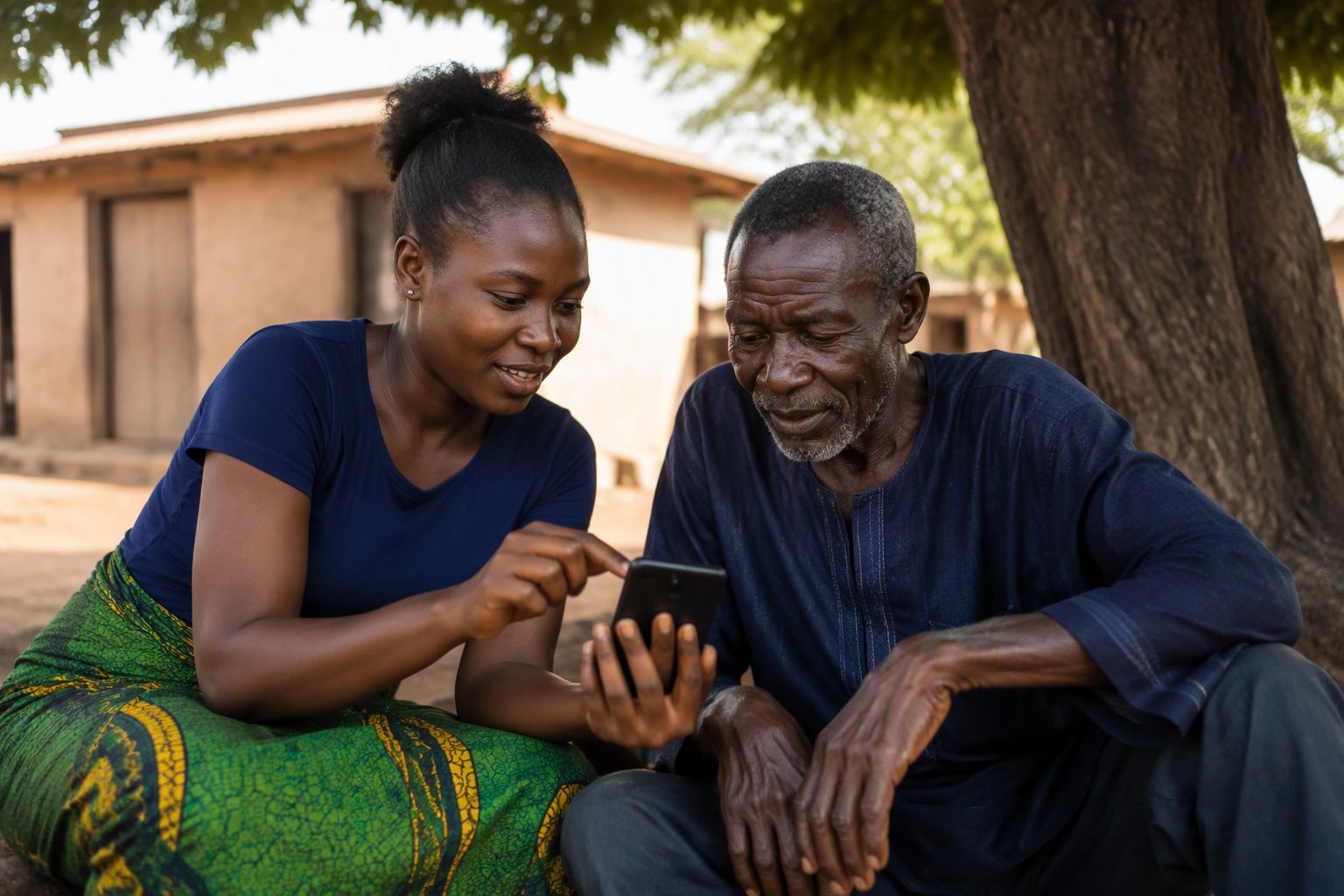
Connectivity statistics count subscriptions. They do not count the moment a grandmother sees her granddaughter’s face on a video call for the first time.
When we talk about the digital divide, we usually talk in numbers: coverage maps, subscription rates, cost per gigabyte. But in the communities where ADIA works, the divide is more personal. It is the trader who cannot check market prices. The parent who cannot read a school notice sent only by messaging app. The job posting that exists only online.
First access is a delicate moment. A bad first experience — a confusing interface, an unexpected cost, a scam — can push a new user back offline for years. That is why ADIA’s onboarding model is built around patience: real humans, local languages, learners’ own devices, and no assumptions about prior knowledge.
The goal is not simply to get people online. It is to reach the point where technology disappears into the background of a useful task — checking a price, registering a business, speaking to family. When that happens, access has become inclusion.
This is an editorial feature written in ADIA’s platform voice. Named beneficiary stories are published only with informed consent.
Back to all storiesKeep reading